
Lawn Alternatives Charlotte: Native Ground Cover Ideas
Lawn alternatives Charlotte homeowners are choosing in 2026 have one thing in common: they solve a problem that turf never could. Shady spots under mature oaks, steep slopes that are dangerous to mow, and hot strips along the driveway all fight grass year after year. Add red clay that compacts and drains slowly, and it is easy to see why the advice in our Charlotte clay soil landscaping guide keeps coming back to one idea. Put the right plant in the right place, and stop forcing turf where it does not want to grow.
This guide walks through the native ground covers that actually thrive in the Piedmont, where each one works best, and how to convert a section of lawn without creating a weedy mess in the process.
Why Charlotte Homeowners Are Replacing Lawn
Tall fescue is the standard cool season grass here, and it struggles every summer. It thins in shade, browns in August heat, and needs fall overseeding to look decent. Warm season Bermuda and zoysia handle heat but go dormant and tan from November through April and want full sun.
That leaves many yards with patches that never look right no matter how much water and fertilizer go into them. The most popular lawn alternatives Charlotte residents turn to are not exotic. They are native plants that evolved in exactly these conditions, so they fill in, hold soil, and need almost nothing once established.
The payoff goes beyond looks. Less lawn means less mowing, less irrigation during summer restrictions, fewer chemicals running into creeks, and more habitat for pollinators and birds.
The Best Native Ground Covers for Charlotte
The lawn alternatives Charlotte gardeners rely on most are native to the Southeast or the wider eastern United States and perform reliably in Mecklenburg and Cabarrus County soils. Each note below includes the conditions where the plant shines.
Pennsylvania Sedge (Carex pensylvanica)
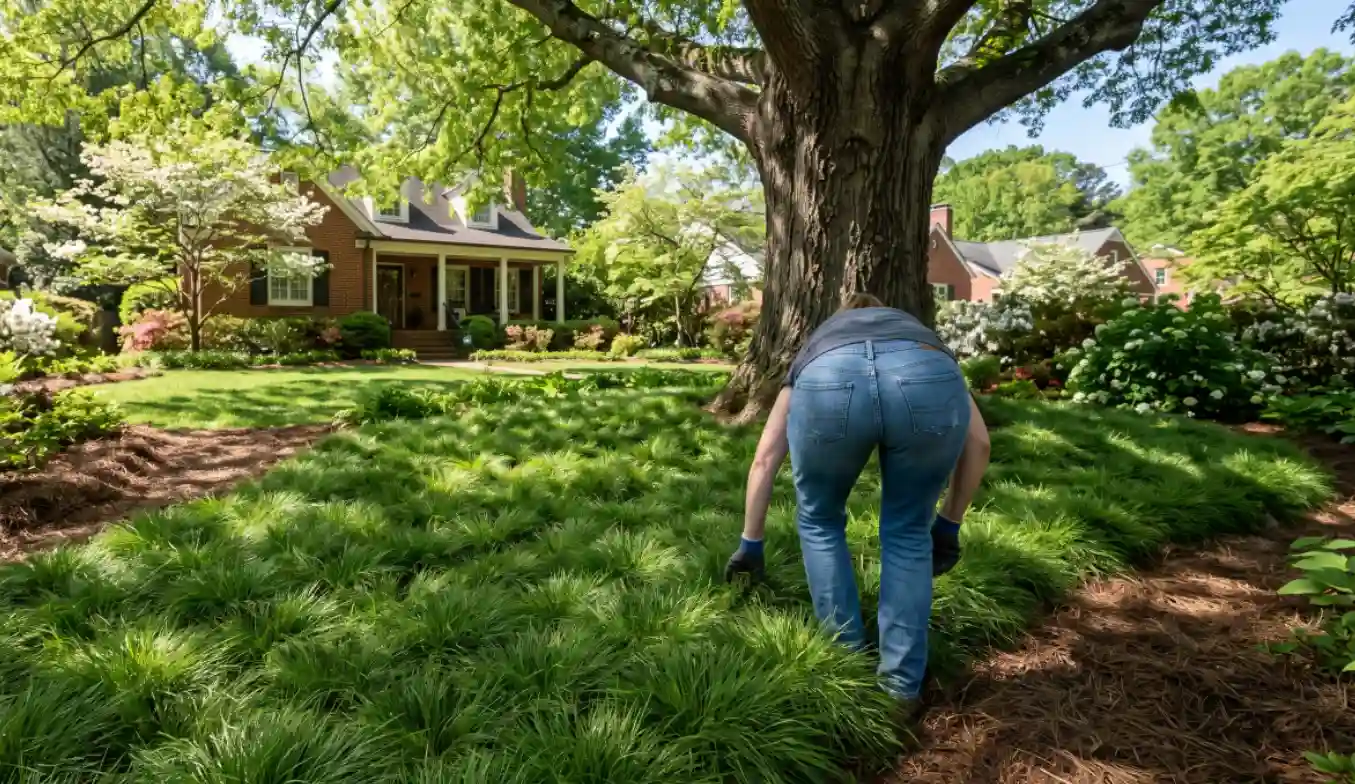
The closest thing to a native lawn substitute for shade. Fine textured, soft green, and about eight inches tall, it can be left alone or mowed two or three times a year. It spreads slowly by rhizomes, tolerates dry shade under trees, and handles light foot traffic. Of all the lawn alternatives Charlotte gardeners ask about for shady front yards, this one delivers the most turf like look.
Texas Sedge and Other Native Carex
Texas sedge (Carex texensis) tolerates more sun than Pennsylvania sedge and forms a dense, low mat. Cherokee sedge and creek sedge fill moist low spots where grass drowns. Sedges are the workhorses of native lawn replacement in the Piedmont and combine well for mixed light conditions.
Green and Gold (Chrysogonum virginianum)
A cheerful native with yellow daisy flowers from spring into summer and glossy foliage that stays semi evergreen through mild winters. It spreads politely in part shade and moist, well drained soil, making it ideal along woodland edges and north facing beds.
Creeping Phlox (Phlox subulata)
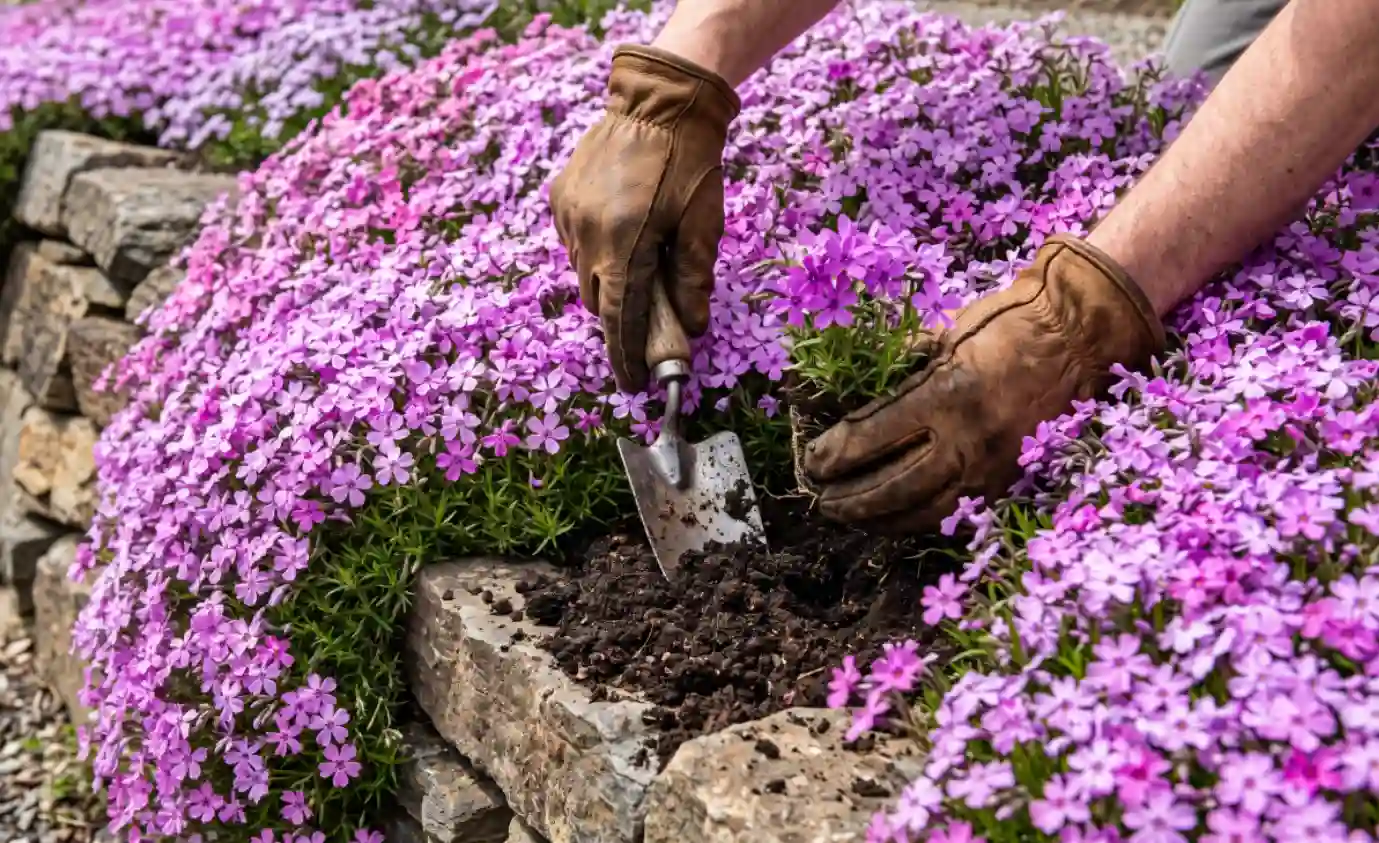
The classic spring carpet of pink, purple, or white. Creeping phlox is native to the eastern United States, loves full sun and sharp drainage, and is one of the best choices for slopes, rock walls, and the hot strip between sidewalk and street. It stays evergreen and needs no mowing.
Wild Ginger (Asarum canadense)
For deep shade where nothing else will grow, wild ginger forms a lush carpet of heart shaped leaves. It wants consistent moisture and rich soil, so amend clay with compost before planting. It is one of the lawn alternatives Charlotte homeowners overlook because it is not showy, but it is nearly indestructible once settled.
Allegheny Spurge (Pachysandra procumbens)
The native cousin of the common Japanese pachysandra, with better texture, spring flowers, and no invasive tendencies. It thrives in shade under trees and tolerates root competition well.
Foamflower (Tiarella cordifolia)
Frothy white spring blooms over patterned foliage. Foamflower spreads by runners in shady, moist beds and pairs well with wild ginger and native ferns.
Frogfruit (Phyla nodiflora)
A tough, low, spreading native for full sun that takes foot traffic, heat, and drought once established. It blooms with tiny white flowers that pollinators love and can even be mowed. It goes dormant in winter, so it works best where a brown patch for a few months is acceptable.
Native Violets and Partridgeberry
Common blue violet is often treated as a weed, but left alone in part shade it forms a dense, flowering ground cover that hosts fritillary butterflies. Partridgeberry is a tiny evergreen creeper with red berries for deep shade and acidic soil, perfect beneath pines and oaks.
Non Native Options Worth Considering
Not every good ground cover is native, and a few well behaved introductions fill gaps. Dwarf mondo grass makes a neat, evergreen, no mow carpet in shade and handles clay well. Creeping thyme works in full sun with excellent drainage, though it often rots in heavy Charlotte clay unless the soil is amended or the site is raised. Microclover blended into existing fescue reduces fertilizer needs and stays green in summer. Among lawn alternatives Charlotte homeowners can plant this fall, these three are the most forgiving for beginners.
Avoid English ivy, vinca, and liriope spicata. All three escape into woodlands and are on North Carolina's invasive watch lists.
Matching Ground Covers to Your Yard
Choosing among the lawn alternatives Charlotte yards can support comes down to three things: sun, moisture, and foot traffic.
- Deep shade, dry: Pennsylvania sedge, Allegheny spurge, partridgeberry
- Shade, moist: wild ginger, foamflower, green and gold, creek sedge
- Full sun, dry slope: creeping phlox, frogfruit, creeping thyme with amended soil
- Full sun, walkable: frogfruit, Texas sedge, microclover in fescue
- Wet low spots: creek sedge, Cherokee sedge, native violets
Most yards have more than one of these zones, which is why a mix of two or three ground covers usually outperforms a single species.
How to Convert Lawn to Ground Cover Without Weeds
The biggest mistake with lawn alternatives Charlotte homeowners plant is putting them into live turf or bare clay and hoping for the best. Weeds win that race every time. Follow this sequence instead.
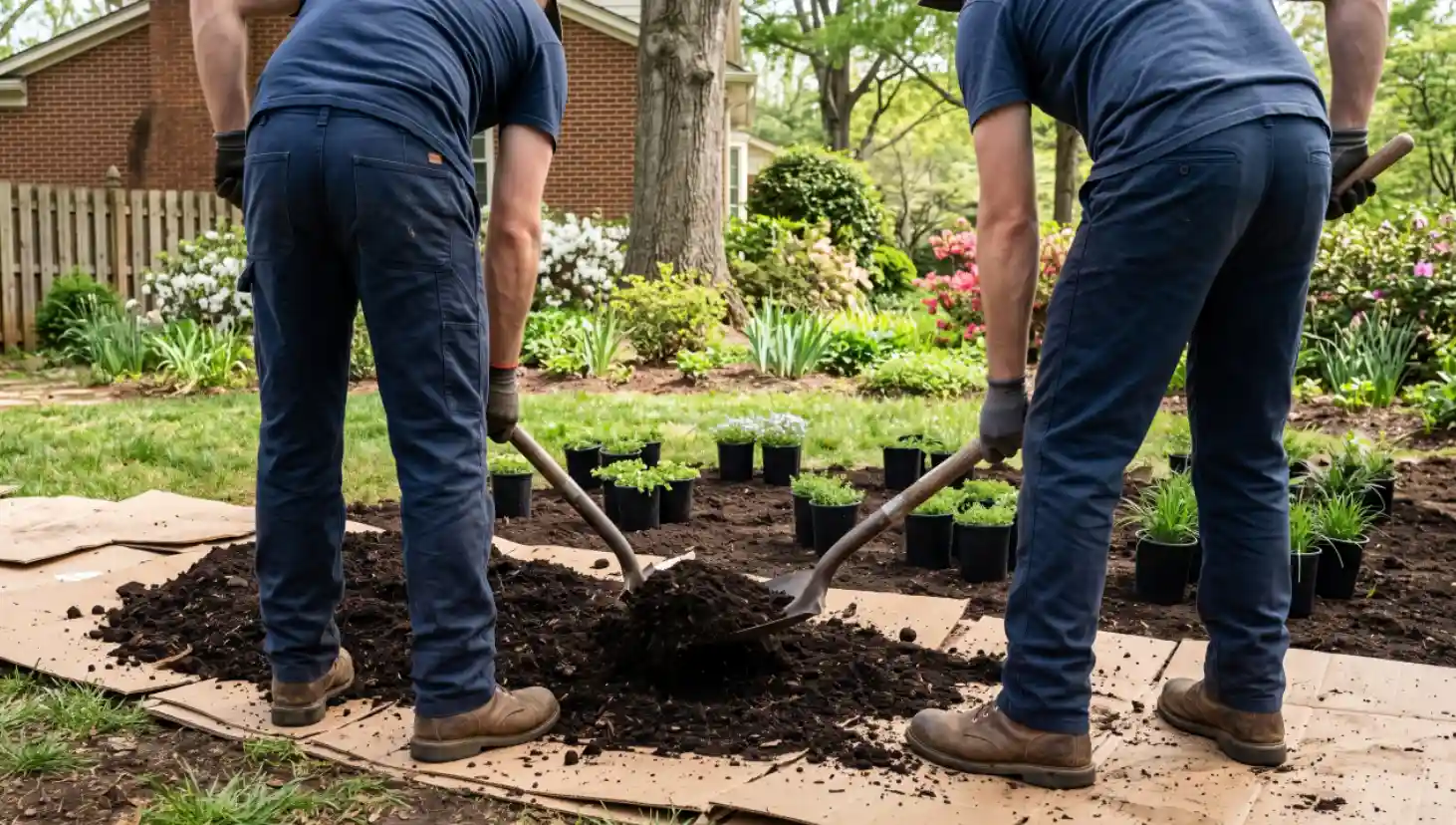
- Kill or remove the turf. Sheet mulching with cardboard and four inches of mulch for two to three months is the least labor intensive method. Sod cutting is faster for small areas. Solarizing under clear plastic works in summer heat.
- Improve the soil. Spread two to three inches of compost and lightly work it into the top few inches of clay. Do not till deeply, which brings up buried weed seeds.
- Plant densely. Space plugs or small pots eight to twelve inches apart. Closer spacing costs more up front but closes the canopy in one season instead of three.
- Mulch between plants. Pine straw or shredded hardwood suppresses weeds while the ground cover fills in.
- Water through the first summer. Even drought tolerant natives need regular water for the first year while roots reach into the clay.
- Weed monthly for the first season. After that, a dense ground cover shades out most competition on its own.
If you would rather hand this off, our planting services handle turf removal, soil preparation, and installation so the new bed establishes cleanly the first time.
Timing Your Lawn Conversion in Charlotte
Fall is the ideal planting window. Soil is still warm, air temperatures are mild, and winter rain settles roots without heat stress. Early spring is the second best option. Avoid planting ground covers in June through August, when new plants struggle to establish in clay that bakes hard between storms.
Plan to remove turf in late summer so beds are ready for October planting. That schedule also lines up with fescue overseeding for any lawn you are keeping. Timing matters more with lawn alternatives Charlotte summers can punish than with almost any other planting project.
What to Expect in Years One, Two, and Three
Ground covers follow the old gardening rule: sleep, creep, then leap. The first year they establish roots and look sparse. The second year they spread noticeably. By the third year most natives have formed a closed carpet that needs only an annual cleanup. Sedges can be cut back once in late winter, spurge and ginger need nothing, and phlox benefits from a light shearing after bloom.
Compared to weekly mowing, fertilizing, and summer watering, that maintenance load is tiny. It is the main reason lawn alternatives Charlotte homeowners install rarely get converted back to grass.
Start Small and Let the Yard Show You
You do not need to tear out the whole lawn. Choose the one patch that has never looked right, replace it with a ground cover suited to its light and moisture, and watch how it performs through a full year. The Groundsmen Landscaping helps Charlotte, Concord, and Cabarrus County homeowners plan and install native ground covers and other lawn alternatives that fit the site and stay beautiful with a fraction of the work. Reach out to talk through your yard.
Frequently Asked Questions
Can I walk on native ground covers?
Sedges, frogfruit, and microclover handle light to moderate foot traffic. Wild ginger, foamflower, and spurge are best in areas people rarely cross. Use stepping stones through any ground cover bed that crosses a regular path.
Will ground covers take over my remaining lawn?
Native sedges and spurge spread slowly and are easy to edge. Frogfruit and violets are more vigorous but are controlled with a simple edging trench or mowing.
How much does it cost to replace lawn with ground cover?
Plugs are inexpensive per plant, but dense spacing adds up. Most homeowners convert one zone at a time and spread the cost over two or three seasons.
Are ground covers deer resistant?
Sedges, wild ginger, Allegheny spurge, and creeping phlox are rarely browsed. Foamflower and violets are occasionally nibbled but recover quickly.
Do I need to remove all the grass first?
Yes. Planting into live turf is the most common reason ground cover projects fail. Kill or strip the grass completely, then plant.